
Shopping cart
Article
0
Sum
0,00 EUR
*incl. tax excl. shipping
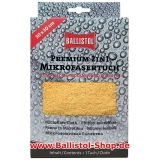
Microfiber Cloth

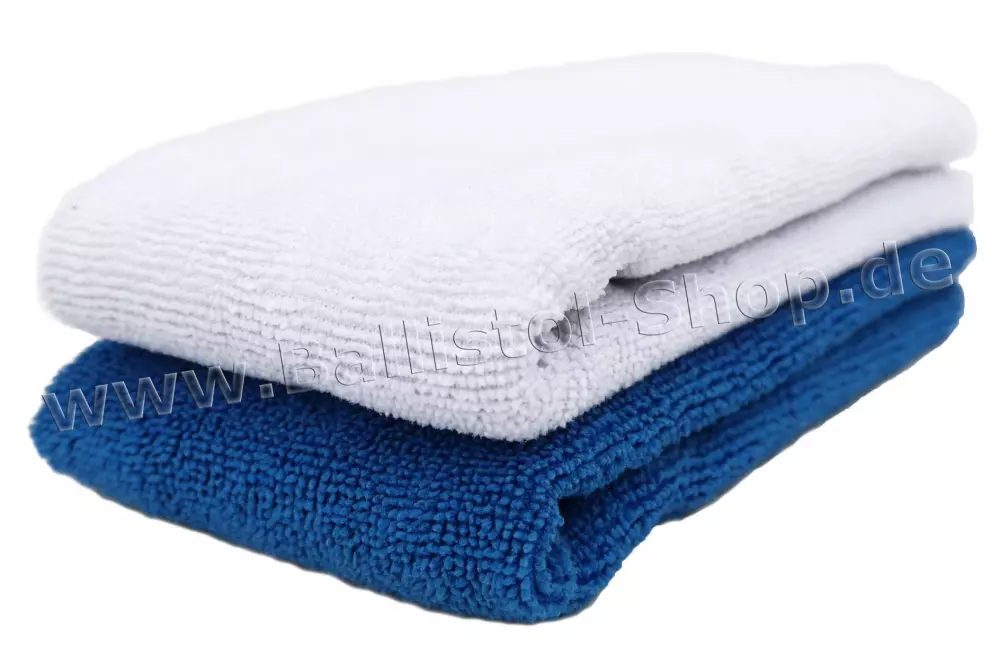
Our microfibre cloth meets the highest standards. It loosens and holds dry as well as damp and oily dirt. Thanks to its medium pile height, it is suitable both for removing coarser dirt and for polishing and cleaning mirror-smooth surfaces.
For most types of dirt you don't need any additional cleaning products with this cloth. The extremely high density of microfibres allows almost all dirt particles to be removed mechanically from almost all surfaces. You achieve the best cleaning results with the cloth dry or only slightly damp.
If you want to apply degreaser evenly over a large area, the microfibre cloth is ideal. Firstly, it is absorbent, and secondly it releases the liquid quickly onto the surface, because it is not the fibres themselves but the spaces between them that soak up liquid (see below for more). As soon as the degreaser has evaporated, the microfibre acts as a cleaning cloth in its own right again. Our high-quality microfibre cloth is resistant to cleaners and other chemicals. The microfibre cloth is also perfect for bike care and bike cleaning.
The most important facts about our microfibre cloth at a glance:
Depending on the surfaces to be cleaned, use a coloured cloth for cleaning and a white cloth as an "indicator" of cleaning success and, if necessary, for polishing.
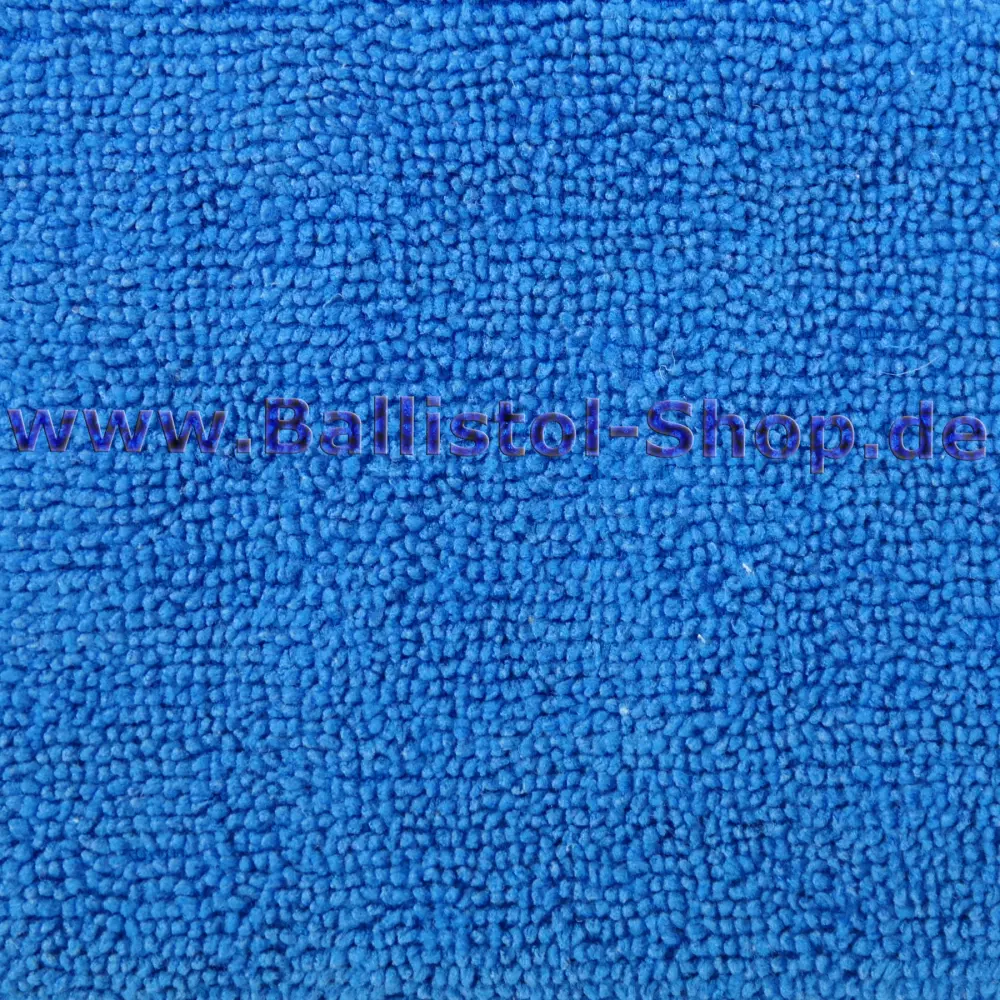
Compared with cotton cloths, a good-quality microfibre cloth has a particularly high number of loops. In addition, the fibres or yarns used, with an average diameter of approx. 5 μm (1 mm = 1000 μm), are only half the diameter of normal cotton fibres.
Polyester is mainly used as the material for the fibres or yarns. This material has always proven to be the best for the various cleaning tasks of microfibre cloths. When it comes to maximising cleaning power, adding polyamide is particularly effective. Apart from the right blend, the high cleaning power of good-quality microfibre cloths comes above all from the enormous number of fibres touching every square millimetre. Physically speaking, the small diameter of the microfibres increases the surface area of the cloth many times over. This allows a microfibre cloth to absorb more dirt faster in its many capillaries.
One advantage of microfibre cloths is therefore that they can clean most surfaces without residue, even without cleaning products. Cleaning with microfibre cloths also takes much less time.
Our microfibre cloth can also be used with solvents and cleaning chemicals to remove particularly stubborn dirt. When dampening high-quality microfibre cloths, however, bear in mind that the cleaning effect, which is due to the special structure of the microfibres, decreases the wetter the cloth gets. For sticky residues, a barely damp microfibre cloth is therefore most effective, because the moisture can loosen the dirt without the fibres being too wet.
Microfibre cloths can generally be washed normally in the washing machine, and it doesn't matter which detergent you use. However, surfactant-free detergents are slightly better. There are a few rules to follow, though:
In principle, microfibre cloths can also be washed at 90 °C. The label almost always says 40 °C. This is because the microfibres are cleaned more gently at lower temperatures, which extends their service life. The recommendation is therefore to base the washing temperature on the type and degree of soiling and to choose a temperature as low as possible and as high as necessary. Microfibre cloths are usually washed at 60 °C. In an endurance test, we washed our microfibre cloths at over 90 °C and tumble-dried them many times in succession without noticing any difference in performance. It is a fact, however, that performance will decline after well over 100 wash cycles of this kind.
Fabric softener has a negative effect on the microfibres. It reduces their ability to absorb dirt or moisture. However, the fabric softener can be washed out again in the next wash and the microfibre cloth will work again.
Microfibre cloths hold on to dirt and particles and of course can't tell the difference between lint and dirt. If you wash microfibre cloths together with natural-fibre textiles, the microfibre cloth will hold on to the lint from the other fabrics. The result is a linty microfibre cloth. So always wash microfibre cloths separately or in a very fine-mesh laundry bag.
Drying microfibre cloths in a tumble dryer is possible but usually a waste of energy, as these fabrics dry much faster in the air than absorbent natural fibres. With microfibres, it is not the fibre itself that is soaked with moisture but the spaces between the fibres. Good microfibre cloths are therefore dry after a short time in the air.
sehr gut
Sehr gutes Produkt, kann es nur empfehlen!
Perfektes Ergebnis, mit diesen Tuch :-)
Very good produtcts! Works perfect!
Sehr gutes Tuch, hält was es verspricht.
sehr gut
Sehr gutes Produkt, kann es nur empfehlen!
Your question about
Do you have questions about this product?
We advise you gladly.
Customers who bought this product bought also the following products:



Similar products:

Other products from the same category:

This information might be of interest to you: